The Art of the Considered Office
An office should do more than function. It should hold focus, encourage clarity, and quietly reflect the life and work that happen within it. Too often, office spaces lean hard in one direction — either purely utilitarian or overly performative. The most compelling ones sit somewhere in between.
A well-designed office begins with function, but it doesn’t end there. Yes, the desk must work. Storage should be intuitive. Light should support long hours and shifting days. But beyond that, the space should feel composed — designed around how someone thinks, creates, and moves through their work.
Achievement doesn’t need to announce itself. When an office is thoughtfully designed, accomplishments surface naturally. A framed degree placed with intention. A shelf that holds both reference books and personal artifacts. Art that reflects taste rather than status. These details don’t dominate the room — they belong to it.
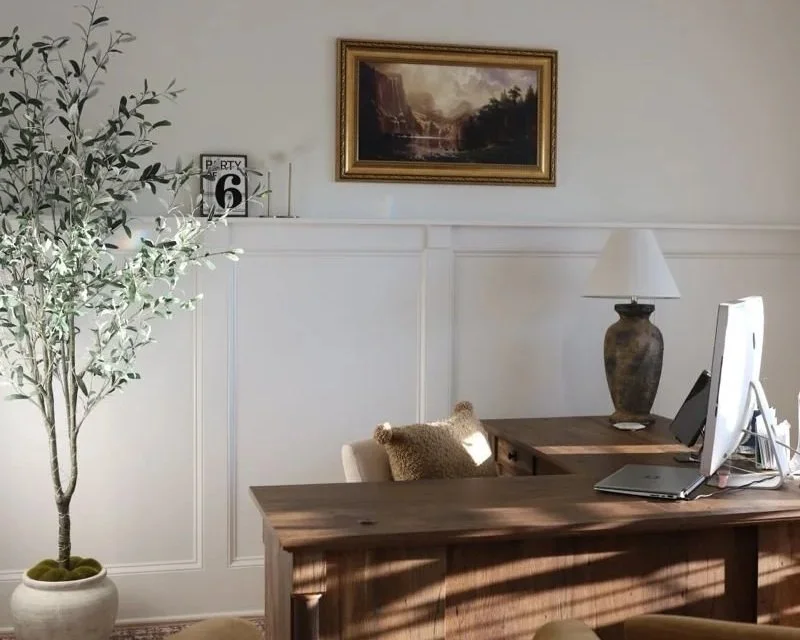
The balance is subtle. An office should feel capable without feeling rigid. Personal without feeling cluttered. It should support productivity while allowing space for pause, reflection, and growth. When done well, the room becomes less about proving something and more about sustaining the work itself.
Designing an office is an exercise in restraint and intention. It’s about creating a space that works hard, feels personal, and lets success speak softly — through balance, composition, and ease.